




Over the years, the definition of the 'creative' has been in flux. No longer comprised of classically trained industry veterans, design has been democratised (for better or for worse, depending on who you ask), and Adobe continues to pioneer this adapting creative sphere.
But what does the creative professional of 2026 look like? And with advancements like Adobe Firefly and the increasing development of AI tools, how does Adobe serve this ever-evolving industry without losing sight of the creatives that supported it from the start?
To understand more, I sat down with Adobe's Vice President, Product Marketing for Creative Professionals, Deepa Subramaniam. Together, we discussed how the brand has grown with its creative users, and how Adobe is innovating for the next generation.

How does Adobe define the creative professional of today?
Ultimately, a creative professional is someone whose job it is to be creative – that can be as broad or as narrow a definition as you want. The job of a creative professional has dramatically changed: print to digital, digital to web, web to mobile, and now we are in this moment of things changing with AI. Workflows are changing; the expectations around creative work are changing because of what AI unlocks.
How they express that taste and how they put their creative expression out into the world is changing. They have more options for how they want to create: tools, agentic features, workflows in an app, mixing of modalities and categories. But still, the creative professional is the person with taste, creative vision and creative expression.

How is Adobe approaching AI anxiety within the creative community?
It's not our job to tell you how to create – it's our job to support you in how you want to create. It comes down to giving you choice. The anxieties get flared when you feel that there is no choice for you, like you're being led down a particular path rather than choosing that path intentionally for yourself.
Do you want to create in flagship applications that are hyper-specific and fantastic for a particular category of work? Photoshop for imaging, Premiere for video and audio editing, etc., or do you want to create in a more multimodal product like Firefly? Do you want to create with an agent in the sidecar or in the driver's seat?
We're just trying to give you a lot of choice. I find that when you give creatives a choice, they make an informed decision. The anxiety lessens because it's the creative taking the steering wheel and making that choice. We want to give them a menu of options to see what kind of shots they can call.
There's an increasing pressure for creatives to produce more content – how is Adobe remedying that?
Acknowledging that it's happening is the first step; then it's about helping to alleviate the pressure from the insatiable need for content. The need to create across different media formats, for different audiences, on different device types – it's challenging to stay on top of that.
But staying on top of that is important and necessary to keep navigating the industry. Acknowledging that is powerful – people look to Adobe to acknowledge and guide the way sometimes. AI does give a few ways for you to stay on top of that pressure for content, but not replace your creativity. It can augment your productivity so you can stay on top of all that growing expectation.

Where does Adobe see the role of creative professional in the next 10 years?
I wish I had a crystal ball. We're seeing an increasing need to touch every part of the creative lifecycle. You're ideating, you're creating, you're doing the post-production, you're scaling – that's only going to continue.
There is a move to creative professionals having a speciality, but also embracing being a generalist too. Like graphic designers being social media whizzes or video editors also being able to do sound and colour. There's still a need to be a specialist, but augmented with generalist capabilities in other mediums and categories. That's why we continue to focus on making our applications interconnected and multimodal because that pressure isn't going to go away.
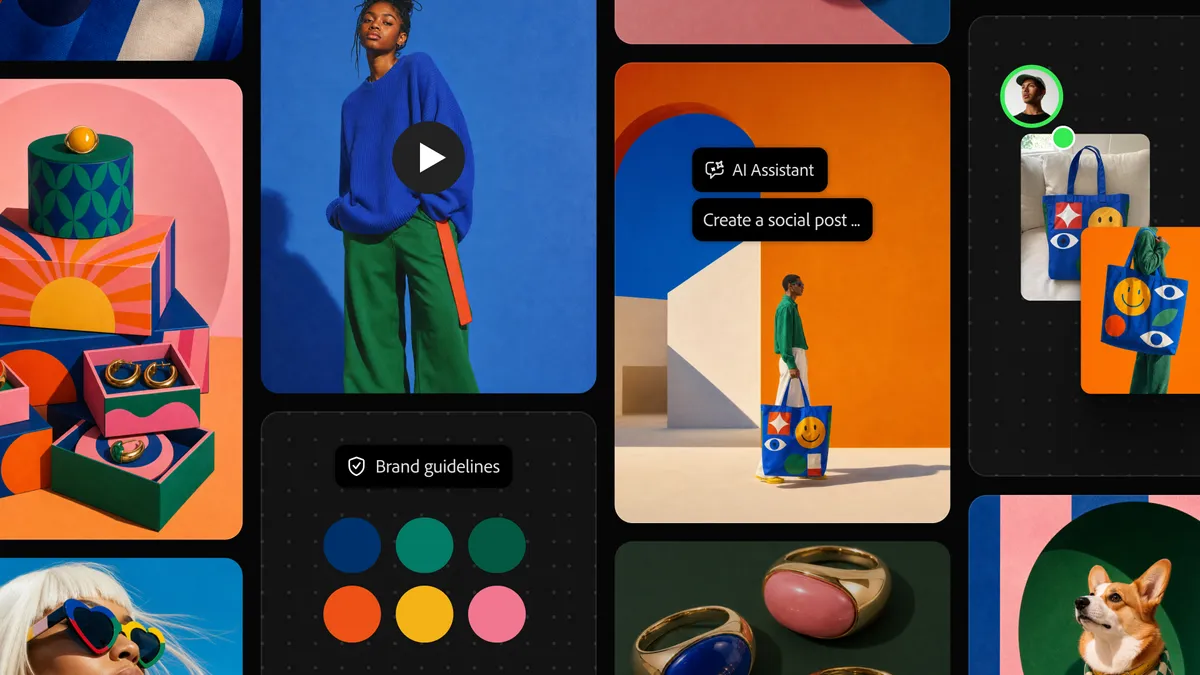
With the rise of influencers, do you think the role of creative professional. is broadening?
In my mind, when I hear "creative professional," that's distinct from content creator or influencer – but maybe they're two sides of the same coin.
It's about creative vision. The role of a creative professional is changing rapidly from repetitive atomic tasks, allowing them to focus on higher-level creative thinking. Some see that as a blessing and a boon. Others see that as a pretty disruptive change to how they operate. Everyone's on their own journey of acknowledging and accepting that change. A creative professional's vision and direction are becoming much more important.
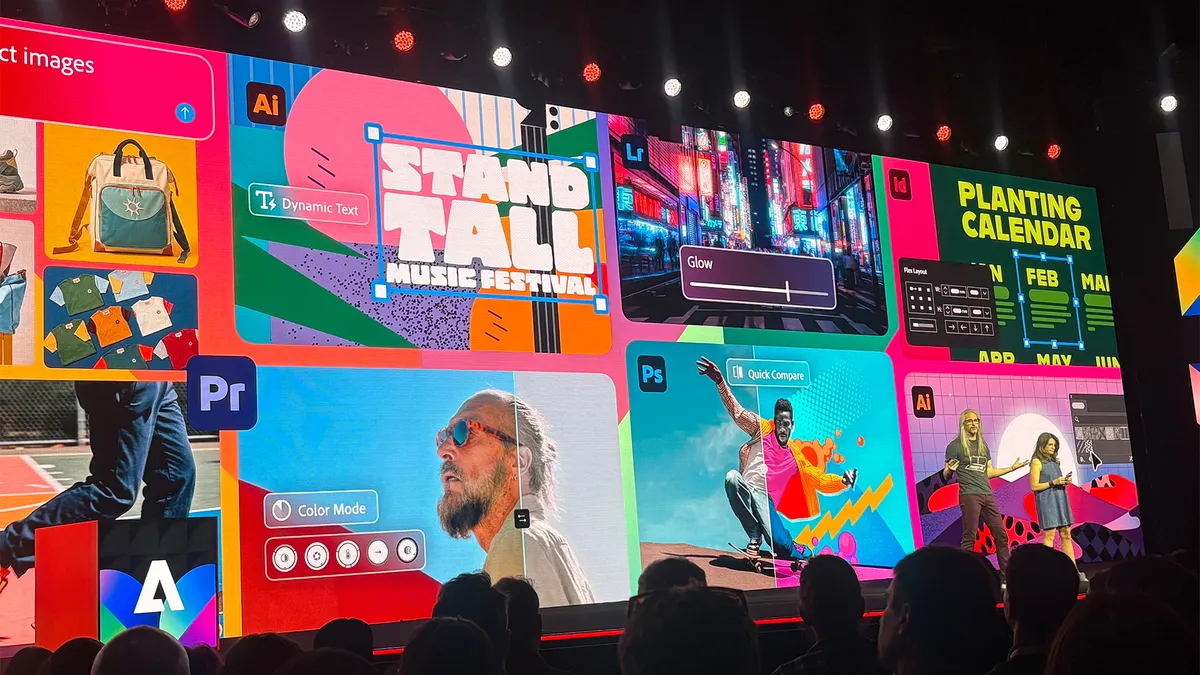
Do you find that there are certain creatives that feel a bit resistant to embracing AI?
Oh yeah, definitely. I've talked to people who were staunchly like, "I have my creative process. Why should I change it? It's been my process for two decades." I absolutely meet people who are staunchly not interested in folding AI into their workflow. And when I've talked to them sometime down the road, often they have adopted some form of AI into their craft. Maybe it's subtle, maybe it's pointed, but I think that just speaks to the fact that everyone's on their own personal journey of evolving how they create.
At the same time, this next generation of creatives is entering the industry only knowing AI. There are creatives who learned and honed their craft well before AI models became a thing, and there are creatives right now who are learning their creative expression in real time alongside it. It's wild.

Why is AI valuable for creative professionals?
Because it can, when wielded appropriately, be a time saver. It's not meant to replace your creativity. It's meant to enhance your creativity. So you can be creative and get stuff done faster, and be more creative. I really believe that is where AI is valuable.
Whether it's creative craft or software development, AI can take the un-fun parts of your job off your plate to prioritise the fun parts of your job. That's the journey we've been on with integrating AI thoughtfully into our portfolio, and people's usage and reception of it seems to prove that we're onto something.