I always thought that a digital experience like Minecraft would have been the logical extension of Lego into the digital space.
Wrong.
Lego is a tangible experience and often the truth is in front of our noses, but we don’t see it.
When Lego unveiled Smart Play – its “most revolutionary innovation” ever, as the company stated – at CES this month, the reaction was immediate. Some are calling it a masterstroke. Others are sceptical that it’s a way to kill creativity (see our Lego controversy explained piece to find out more).
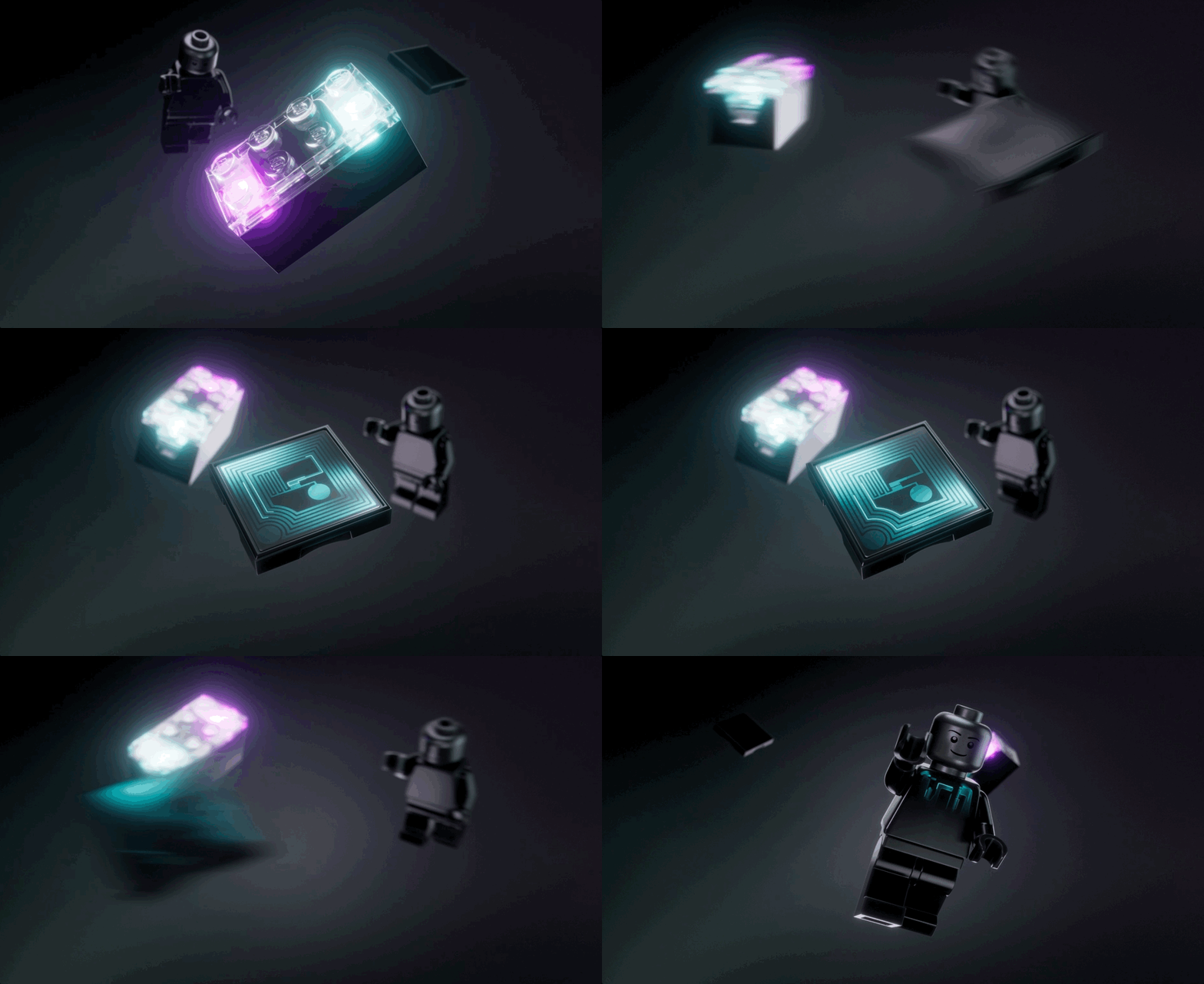
The new Smart Play system, launching with a Star Wars collection in March, will bring 3-dimensional Lego into a fourth dimension of play. The Smart Bricks sense motion, position, and direction, and respond with sound.

Move an X-wing, and it whooshes. Tilt R2-D2 and you get their sweet, familiar beep. And according to Lego, this is just the beginning. Soon, they’ll roll out seemingly limitless combinations and cross-interactions between cars, figures, and scenarios.
As a lifelong Lego and Star Wars fan (and now a parent and a designer), this hits me on several levels. There’s nostalgia, curiosity, excitement, and no hesitation whatsoever about the success of this product. Because at the heart of Lego has always been a third dimension in parallel. How those builds come to life – their sounds, movement and entire functions – live in the creator's imagination. No batteries required.
Now, some fans are uncomfortable: if sound and movement become part of the brick's function (batteries required), what’s left for you to imagine?
A thoughtful evolution

Around a century ago, audio brought a new dimension into movies, and it was a creative burst for the industry, adding several layers of storytelling. This didn’t kill filmmakers’ creativity.
Many toys have a sound and light feature, but the interaction they provide is scarce. Lego is not new to technological advancements, and electric vehicles like trains are already a reality in the Lego City series.
The new Smart Play system feels like a thoughtful evolution that has carefully considered Lego’s mission of play, surprise, engagement, and adds yet another layer of interactivity. That’s hard to do, especially when you’re a legacy brand with a huge global fanbase and a mythical status. Yes, mythical.
Lego is probably the only brand that allows users to give their own meaning to it. Admire the latest Star Wars B-Wing collector model for hours, play a car race with impossible vehicles, or be simply mesmerised by the beauty of each new brick and the technological evolutions of Lego Technic and Lego City. Now: Smart Play.

I see this as the next step ahead. As a collector, I’m excited for Smart Play as an extension of the play experience. As a brand designer, I’m impressed by Smart Play as an extension of the Lego brand experience. The entire Lego ecosystem represents a creative outlet.
Smart Play invites us to take part in a more dynamic form of storytelling. It’s still your Lego, just more exciting, more alive, and even more interactive.
Yes, change is risky, but irrelevance is even riskier.
Yes, change is risky, but irrelevance is even riskier.
The Smart Play system isn’t abandoning the past and isn't killing creativity. They are a natural and logical extension of Lego’s original essence, now engaging a new generation of the digitally native who live in a world where tech is both intuitive and ubiquitous. Smart Play merges the physical and digital, and creates a new level of relevance while staying true to the core of Lego play.
From a brand perspective, this is a smart move. A great lesson in experience design.
Brands today craft moments and use technology to deepen emotional engagement.
Whatever you’re crafting – a car, an app, a birthday cake – what matters is how it makes someone feel and how technology can enhance our experience. Smart Play incorporates today’s technology to help feel a deeper sense of connection with the worlds that players want to create. Lego is choosing to engage, and it’s doing it on its own terms.

This is the perfect moment to evolve for Lego. The team didn’t reach a moment of declining sales or loss in popularity to do something drastic; in fact, totally the opposite. In one of its most popular and successful moments, Lego did not rest on its laurels; instead, they thought, in a moment where technology is booming all around us, how can we enhance our own experience?
Doing something easy and making it successful is sometimes very difficult
This is the ultimate lesson. Yes, change will always be met with some level of resistance. It is inevitable. But being true to who you are and what you stand for is at the core of each successful brand, and helps set the path forward. Once again, it’s the basic (and easiest) recipe for success. But doing something easy and making it successful is sometimes very difficult. So, it took 10 years for the Lego team to develop something and (hopefully) get it right. This is what Smart Play is bringing to the table today.
Progress doesn’t have to mean complete reinvention. Sometimes, it just means turning the volume up on what’s already there.
For more on Lego Smart Bricks, see Creative Bloq's ecom writer's initial reaction to the Lego Smart Brick.

