Disney's Moana returns to the big screen next week in a live-action remake of the 2016 animation. As with many of Disney's remakes, it's been the subject of some controversy. The Rock looks simply ridiculous, for a start. And then there are the persistent accusations of cultural homogenisation and commodification.
That's brought up the topic of a much older film that some think may have inspired Disney. Long before the animation giant chose the Polynesian name for its seafaring heroine, the US filmmaker Robert J. Flaherty made a very different Moana.
His silent film from 1926 showed scenes of life in Samoa and gave birth to the concept of documentary filmmaking. But looking back now, it seems it might not have been a whole lot more authentic than The Rock's wig.

It was Scottish filmmaker and critic John Grierson who first used the word 'documentary' in a film context in his description of Moana. Flaherty had gained fame with Nanook of the North about the Inuit civilisation.
In Samoa, where he stayed for over a year, he intended to make a movie about sea monsters. Discovering that they didn't exist, he instead made a film that eschewed story in favour of vignettes showing everyday life in the village of Safune. This includes tattooing, capturing a giant turtle and preparation of food.
Only, Moana was more what we would today call docufiction. Scenes were staged to appear authentic, but Flaherty assigned local people to roles, invented family relationships and showed cultural traditions that were no longer practised in 1926.

Today, some Samoans say they view Flaherty's Moana fondly since it preserved a record of cultural traditions that were already disappearing. Others argue that Flaherty's film reflects a colonial gaze based on Western fantasies of a primitive Eden.
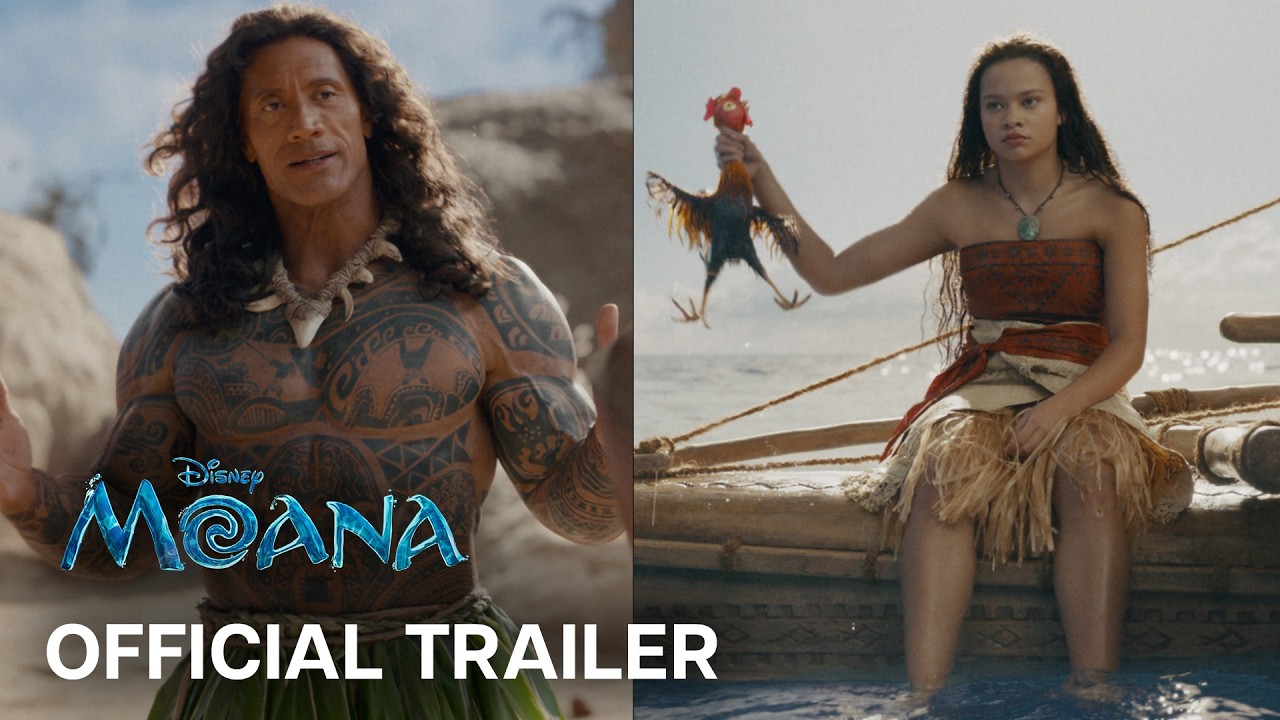
The film historian historian Bruce Posner told The Guardian he believes “someone at Disney picked the bones of the 1926 Moana to make their movie.” That might be why some of the same tensions remain between representation and ethnographic romanticisation and simplification.
Before the release of the 2016 animation, Disney consulted with experts at the Oceanic Story Trust to ensure cultural accuracy, including around wayfinding navigation, and to avoid the exoticism and stereotypes common in earlier films like Pocahontas or Aladdin.
The live-action remake stars the Samoan Australian actor Catherine Lagaʻaia in the lead role, and she plays Moana as an empowered heroine. But despite the attempts at respectful representation, some still argue that the Moana franchise perpetuates stereotypes, particularly in the comical characterisation of Maui (The Rock) and in how the franchise homogenises diverse Pacific cultures into a single identity.
Disney's Moana will be released on 10 July. Will you be going to see it?