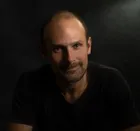
AI slop was all over social media in 2025, and Meta's head of Instagram Adam Mosseri has finally recognised something that was pretty apparent. Authenticity is going to be an issue in 2026.
A lot of AI-generated content still has glitchy artifacts and that glossy, almost plastic sheen that gives it away. But it will get harder to distinguish as AI models become better at replicating less hyper-real styles.
While Adam says Meta's still trying to improve its identification of AI-generated media, he seems keen to pass the buck. AI content is becoming so ubiquitous that it will be more practical to signpost real media, he now reckons. And in the meantime, its up to creatives to prove they're not fake.
"Everything that made creators matter—the ability to be real, to connect, to have a voice that couldn’t be faked—is now suddenly accessible to anyone with the right tools," Adam writes in a long post on Threads. "The feeds are starting to fill up with synthetic everything."
This makes him sound like they come from a disinterested observer expressing surprised interest at what's happening. That's implausible when Instagram's been encouraging people to use Meta's own AI models and let loose AI users on Instagram a year ago.
Meta's made an attempt to flag AI-generated media with its 'AI info' tag, but a vast amount goes undetected, while genuine photos with minor AI retouching were getting flagged. Adam's recent post seems like an unreluctant admittance of defeat.
“All the major platforms will do good work identifying AI content, but they will get worse at it over time as AI gets better at imitating reality. There is already a growing number of people who believe, as I do, that it will be more practical to fingerprint real media than fake media,” he writes.
One idea for how this could work is that camera manufacturers could ”cryptographically sign images at capture, creating a chain of custody.”
That's actually already in process. Many camera manufacturers have already integrated or announced plans to integrate tamper-evident metadata via the Content Authenticity Initiative (CAI) and/or the Coalition for Content Provenance and Authenticity (C2PA) to verify the origin of images. Meta needs to find a way to read that.
Adam doesn't mention other media. Maybe he thinks all the illustrators and digital artists have already left Instagram for anti-AI Cara. But here too, potential solutions for identifying real content already exist. Adobe software can verify authenticity through Content Credentials. Again, Instagram needs to be able to read that data if it's serious about wanting to signpost non-AI material.
Prove you're real
What can creatives do in the meantime? Make things uglier is Adam's suggestion. His reasoning is that AI and cameraphones have together made professional-looking imagery ubiquitous, cheapening it.
He goes as far to say that camera companies “are betting on the wrong aesthetic”.
“They're competing to make everyone look like a professional photographer from the past. Every year we see phone cameras boast about more megapixels and image processing. We are romanticising the past. Portrait mode is artificially blurring the background of a photograph to reproduce the soft glow you get from the shallow depth of field of a fixed lens. It looks good, and we like to look good."
The suggestion that camera companies were wrong to improve their products is bizarre, as if the sole purpose of cameras were to produce the latest trending Instagram aesthetic in body. But the prediction of where Instagram is going is probably accurate: creatives will have to prove they're real.
“Flattering imagery is cheap to produce and boring to consume. People want content that feels real,“ Adam says. “We are going to see a significant acceleration of a more raw aesthetic over the next few years.
“Savvy creators are going to lean into explicitly unproduced and unflattering images of themselves. In a world where everything can be perfected, imperfection becomes a signal. Rawness isn’t just aesthetic preference anymore—it’s proof. It’s defensive. A way of saying: this is real because it’s imperfect.”
What that means for artists and designers is that the clever Instagram layouts we raved about back in 2018 are now irrelevant. Instead, creatives have a couple of options.
The first is to decide Instagram isn't worth it and stop worrying about it (see our pick of the best social media for artists and designers for alternatives).
But if Instagram is still important for your visibility as an artist, it might be time to start sharing behind-the-scenes videos and works in progress if you're not already doing so. Instead consider the approach that many creatives have already switched to. Instead of posting final edits or renders, show processes and content that says something about you as an artist.
Instead of showing what you created, show how you created it, how hard it was to create, and how only you could create it. Until Instagram can identify what's AI, or what's not, creatives will have to get used to proving that their work is real and that they made it.