




The use of generative AI in video game development causes massive controversy. Players keep saying they don't want it, and yet the use of AI continues to increase rapidly. But does it have to be slop?
At South by Southwest (SXSW) this week, Brazilian studio ARVORE revealed a game that they think shows 'handcrafted' and 'AI-generated' aren't necessarily contradictory terms.
Fabula Rasa: Dead Man Talking is a narrative game in which AI is used to give characters a life of their own. The idea is that they respond naturally to players' interactions, making the player the co-author of a story that's never the same twice.
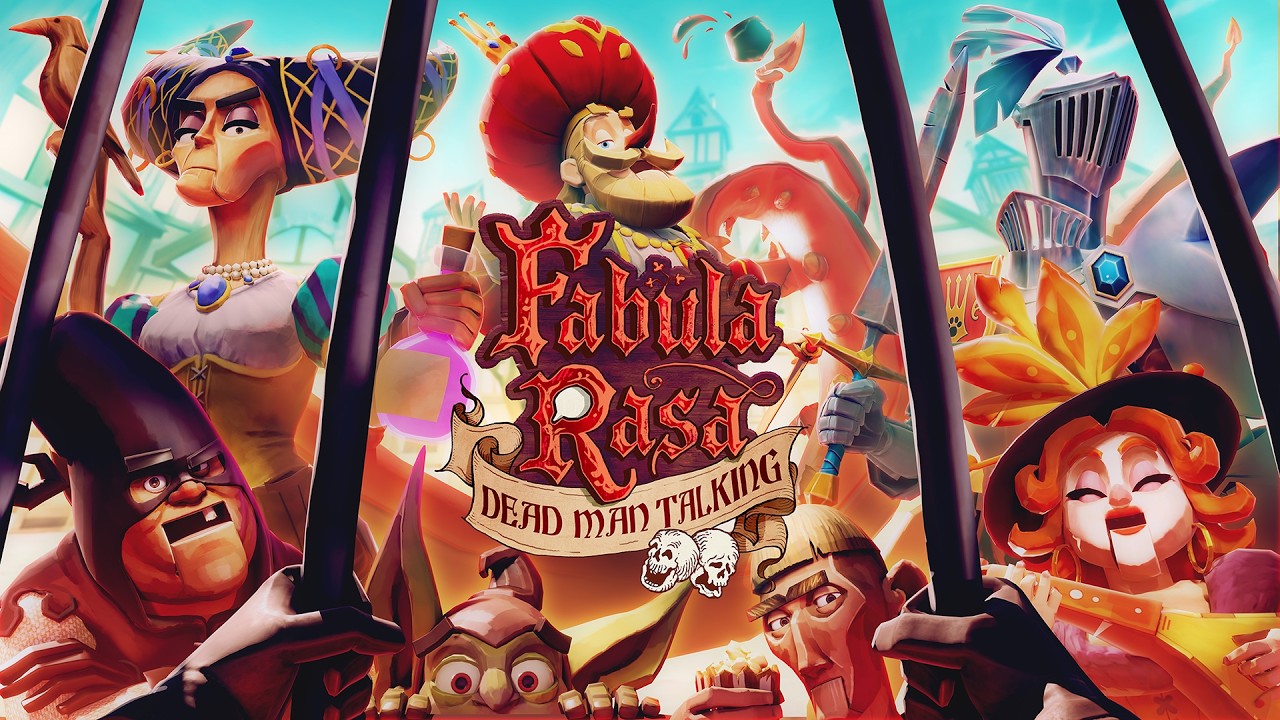
Fabula Rasa is a fantasy VR interactive experience where players are imprisoned in a cage at the centre of a medieval town. The story unfolds through real-time conversations with AI-powered characters, who respond to player arguments to decide whether to save them or let them be tossed into a monster pit.
In the making of video above, ARVORE's Luiza Justus and Marcelo Marcati say they approached the game's development as artists, intending to use AI not to save time or money but to see if it could be a "creative medium, or even a stage partner". They say the art and sound for the game were handcrafted; AI was used only to give the characters brains.
The challenge, they say, was to connect the generative AI model with traditional game logic. They wrote prompts for the AI to control each character's personality, emotion and speech, while the game engine handles movement and world awareness. Real-time updates feed into the AI so characters are aware of what's happening in the world around them, the AI then processes how they feel about it and sends messages back to the engine in continuous feedback.

Marcelo, the game's director, says Fabula Rasa began an experiment but ended up challenging the team’s design capabilities while also helping them appreciate the nature of play.
The scenery in Fabul a Rasa looks like a stage and characters look like puppets. ARVORE says this wasintentional to remind players that the game is a performance.
Fabula Rasa is only a demo for now, but ARVORE hopes to expand it. The project shows the possibilities of the kind of tech that Nvidia has been demonstrating with its ACE AI game characters.
The reactions to Sony's AI-generated Aloy raised doubts over how such innovations would be received, but ARVORE aims to show that this is one area where generative AI can play a role in creating interesting new experiences, whether they can be considered a game or something different.
Following SXSW, there will be a demo appearance at FilmGate Interactive from Wednesday 18 March to Sunday 21 March. You can learn more on the studio's website.