



I've been writing for Creative Bloq since I managed the team that launched it in 2012. At the time, I remember a battle raging about the use of minimalism in design. But back then, this was pretty dry stuff; only taking place within the narrow niche of the graphic design profession, and usually with good humour.
If I'd chatted to my non-designer mates in the pub about this issue, they'd have given me a funny look. And if you'd told me that, in 13 years' time, ordinary people would be screaming at each other about it across the Atlantic, I'd have said you were nuts.
Yet this August, US restaurant chain Cracker Barrel decided to modernise its logo… and that's exactly what happened.
Out with Uncle

This was, by the standards of the profession, a textbook corporate rebrand. Out went Uncle Herschel, the anonymous old-timer in overalls who'd sat beside the company name since 1977. In came a cleaner, more versatile barrel motif. Who would have a problem with that?
Turns out, the Republican right. Donald Trump Jr questioned the change on X, declaring the brand had "scrapped a beloved American aesthetic and replaced it with sterile, soulless branding". Lots of MAGA supporters then piled in to attack the restaurant chain. I'll be honest, though: I do wonder how many of them would have cared, or even noticed, in a previous era.
Either way, within days Cracker Barrel had reversed the rebrand entirely. Their stock then promptly tanked 10%, foot traffic dropped, and the company learned the hard way that retreating can be more damaging than holding firm.
Rage against the (lack of) machine
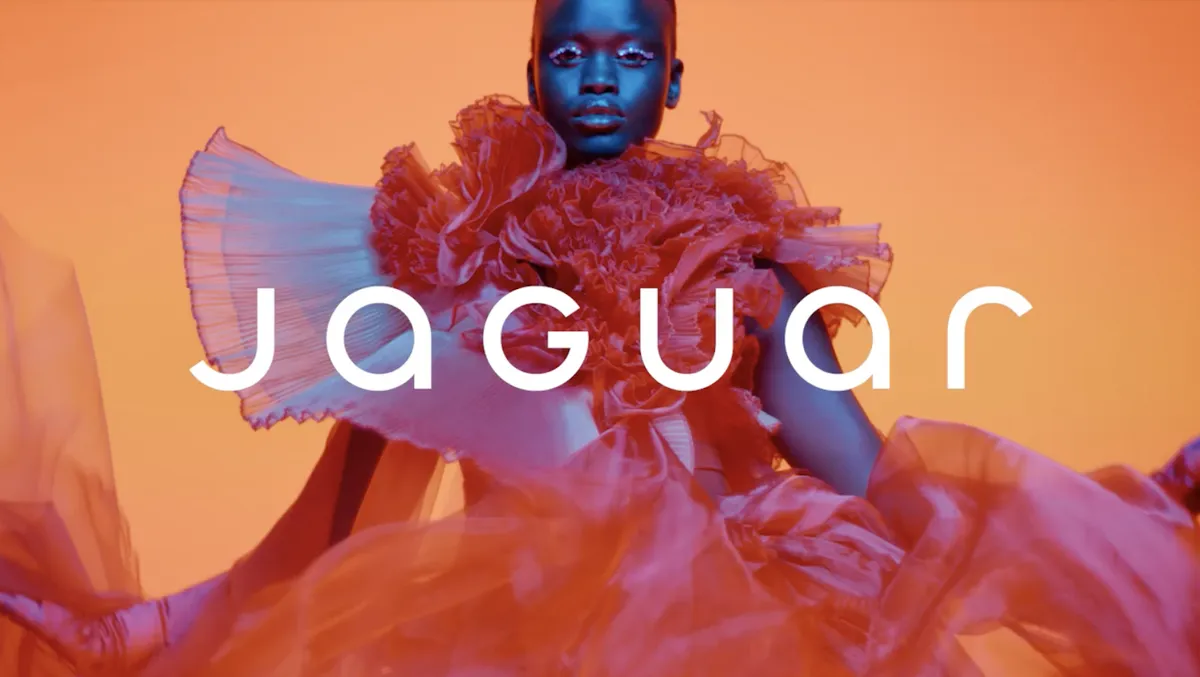
This was, though, by no means the only branding controversy to spill over into mainstream discourse. The fallout from Jaguar's rebrand in late 2024, for example, continued to rage into the new year and beyond.
The backlash here was less nakedly partisan; more a deep-seated roar from an older generation with a well-formed view of what car branding should look like. Because let's be clear: this odd little campaign, with its abstract visuals and launch video without a single car, didn't just provoke a mild 'tut'. It angered so many people, so visibly, so greatly, that it became a major cultural moment.
A year later, with Jaguar sales down dramatically, the value of such "nuclear-option" rebrands is commonly being called into question. And whatever you think of what Jaguar did, it's a worrying thought that change itself is becoming contested territory.
Jeans vs genes

Nothing in branding, though, was more contested in 2025 than Sydney Sweeney's American Eagle campaign. What should have been a straightforward denim ad became a Rorschach test for competing cultural anxieties. The wordplay on "genes" versus "jeans" was read by some as coded right-wing messaging, by others as an innocent bit of fun. And both sides felt equally strongly that the other side was wholly in the wrong.
You have to wonder why, alongside Sydney, American Eagle didn't just have other equally attractive models of different races and genders giving the same line about having "great genes". The pun would have worked just as well. And although us plain looking people might have felt slightly aggrieved, it wouldn't have been the first time we'd been put in our place by an ad.
Instead, American Eagle just went for the beautiful blonde. Perhaps they actually wanted to wind people up. Perhaps they simply didn't expect the backlash. Either way, the campaign revealed something crucial: there's no neutral ground in our society any more. Every aesthetic choice carries cultural weight.
Coca-Cola doubles down
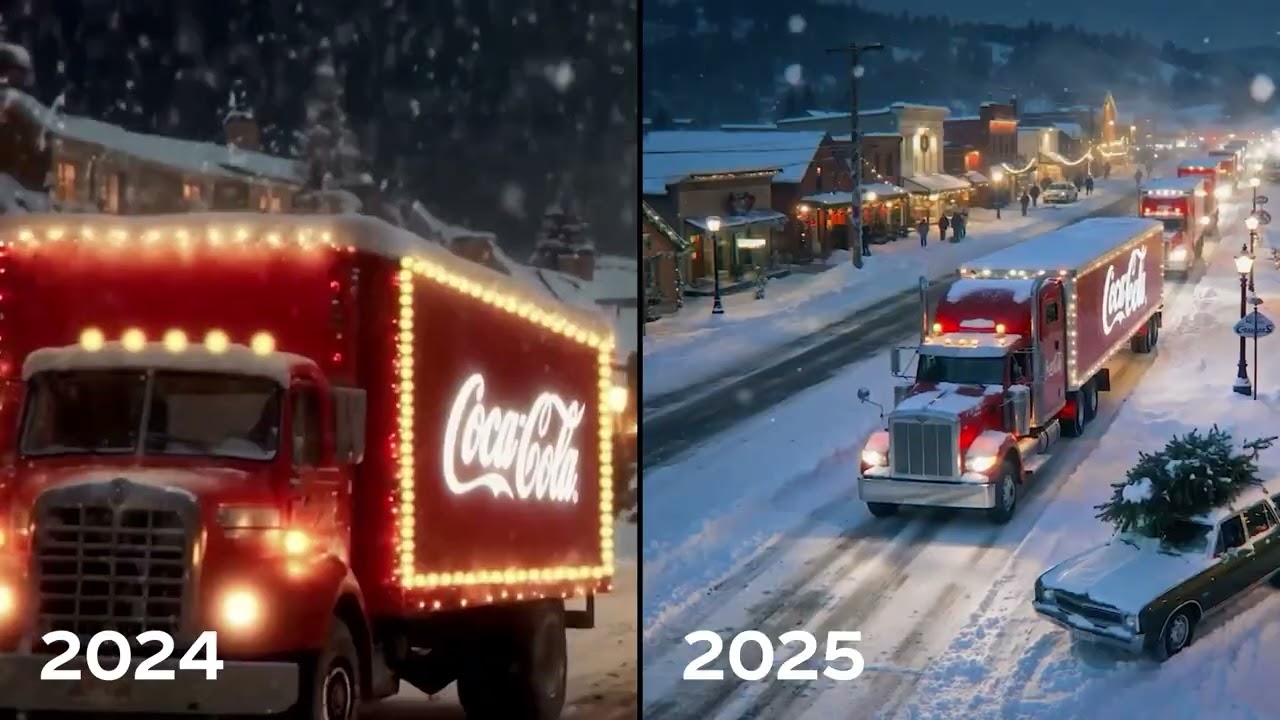
This isn't only about the culture war, either. The controversy over AI, for example, doesn't divide neatly on partisan lines, but it became just as much a flashpoint in 2025. In that light, you have to wonder what Coca-Cola's was playing at. Because after 2024's AI-generated holiday ad sparked major criticism, the brand simply doubled down this year with another machine-made effort.
The latest ad featured trucks that defied physics, changed shape between shots, and demonstrated that insufficient human oversight had been applied. Made by a "tiny team of five specialists" who churned out 70,000 video clips in 30 days, it felt less like creativity and more like algorithmic content farming.
Some saw this as proof that AI threatens creative integrity. Others viewed the backlash as Luddite resistance to technological progress. Both camps agreed on one thing, though: the ad looked terrible.
Key takeaways
So what have we learned? Here, I think, is the uncomfortable truth: brands can't navigate all this through better design alone.
The backlash against Cracker Barrel wasn't really about the logo: it was about competing visions of cultural identity, expressed through the medium of design criticism. The fury over AI-generated Coca-Cola ads wasn't just about quality: it was about deeper anxieties regarding automation, creativity and what we value in commercial art.
The main lesson is this. In 2026 and beyond, every brand decision may potentially get interpreted through a political or cultural lens… whether you intend it or not. That doesn't mean you should avoid taking risks or modernising your identity. But it does mean you need to understand exactly what different audiences will read into your choices.
Polarisation is here to stay
Cracker Barrel's rustic imagery wasn't just an old-fashioned quirk to some customers; it was an emotional anchor. Stripping it away was read by some as rejection. Jaguar's heritage was its strongest asset, but the brand discarded it in pursuit of relevance with a different demographic. Some read that as progress; others read it as erasure.
Casting a single, perfect blonde as the face of a “great genes” gag meant American Eagle wasn’t just selling jeans, but – intentionally or not – making a statement about who gets to embody aspiration. Because in an era when branding is read as ideology, even a throwaway pun can land like a manifesto.
And AI? It's a tool whose use carries symbolic weight beyond its functional applications. Some see it as efficiency and innovation. Others see it as devaluing human creativity. Coca-Cola's mistake wasn't necessarily using AI: it was using it in a way that looked like cost-cutting at the expense of the craft that built their brand equity.
Mark my words, this polarisation isn't going anywhere. Multiple constituencies will keep demanding different things from brands, often in direct opposition to each other. Companies will keep facing situations where they're criticised, whatever position they take, or don't take. And the brands that survive will be the ones that stop trying to please everyone and start serving their actual audience with conviction. (Apologizing or reversing, like Cracker Barrel did, often fuels the fire more than the original change did.)
Because here's what 2025 taught us. Turns out that attempting to be everything to everyone is actually the riskiest strategy of all.