


Australian-Irish illustrator Oliver Jeffers has created over 20 picture books for children. Beloved in households around the world, the stories often distill big ideas into gorgeously crafted characters and scenarios.
His latest book, I'm Very Busy - A (Nearly Forgotten) Birthday Book centres around Bridget. She wants to spend her birthday with her friends but they're all too busy. The story explores the concept of busyness and the power of friendship.
I chatted to Oliver about his new book, as well as whether good children's stories need a message to be successful. You can also read more of more of my chat with Oliver elsewhere on the site, where we discuss his latest project with Apple.

What sparked the idea for I'm Very Busy?
It's the modern curse of our time. As Lewis Carroll says, "the hurrier, I go, the behinder I get". And with very short attention spans, definitely fuelled by a 24 hour news industry and social media use, I think that we are so distracted that there's this notion of constantly keeping up with appearances, keeping up with the Joneses. We are busier than we've ever been, but we also simultaneously seem to accomplish less.
That's been something I've been thinking about for a long time, especially as somebody who would consider myself an ambitious artist and then being a parent. These two things do not go hand in hand. That was always a concept that was floating up out of my work – how it is that we choose to spend our time.
When people say ‘I don't have time’ to do something, I've often thought that's technically not true. You do have time. In fact, time is the only thing that you do have, really. It's how you prioritise that time. It's how you choose to spend that time.

If you don't have time for something, what you're really saying is, ‘I don't prioritise this’. And when you rephrase that, it really makes you think. It's like, ‘I don't have time to go to the doctor’. It means,’ I'm not prioritising going to the doctor’. Is that really a wise use of your time? Or it’s like, ‘I don't have time to play with the kids. I'm not prioritising playing with the kids’. It reframes how you think about things.
So the notions of time and how we use it have been in my work, but then applying it to this fun concept about forgetting somebody's birthday. All good ideas for stories tend to come from a combination of two or three smaller ideas.
It was the pairing together of these things that I thought worked. It was actually a story that I'd made in a short version a couple of years ago, and it was floating around in my sketchbooks, and my editor saw it. We had talked about developing it into a larger book and then the insanity of mental health and this constant notion of the hamster wheel and the rat race becomes more and more of an issue every year, so [we thought] maybe now is the time to explore this.
But it only really works, I think, as almost like a disposable throwaway, joking book about forgetting birthdays.

Did you explore any new techniques or new media for your new book?
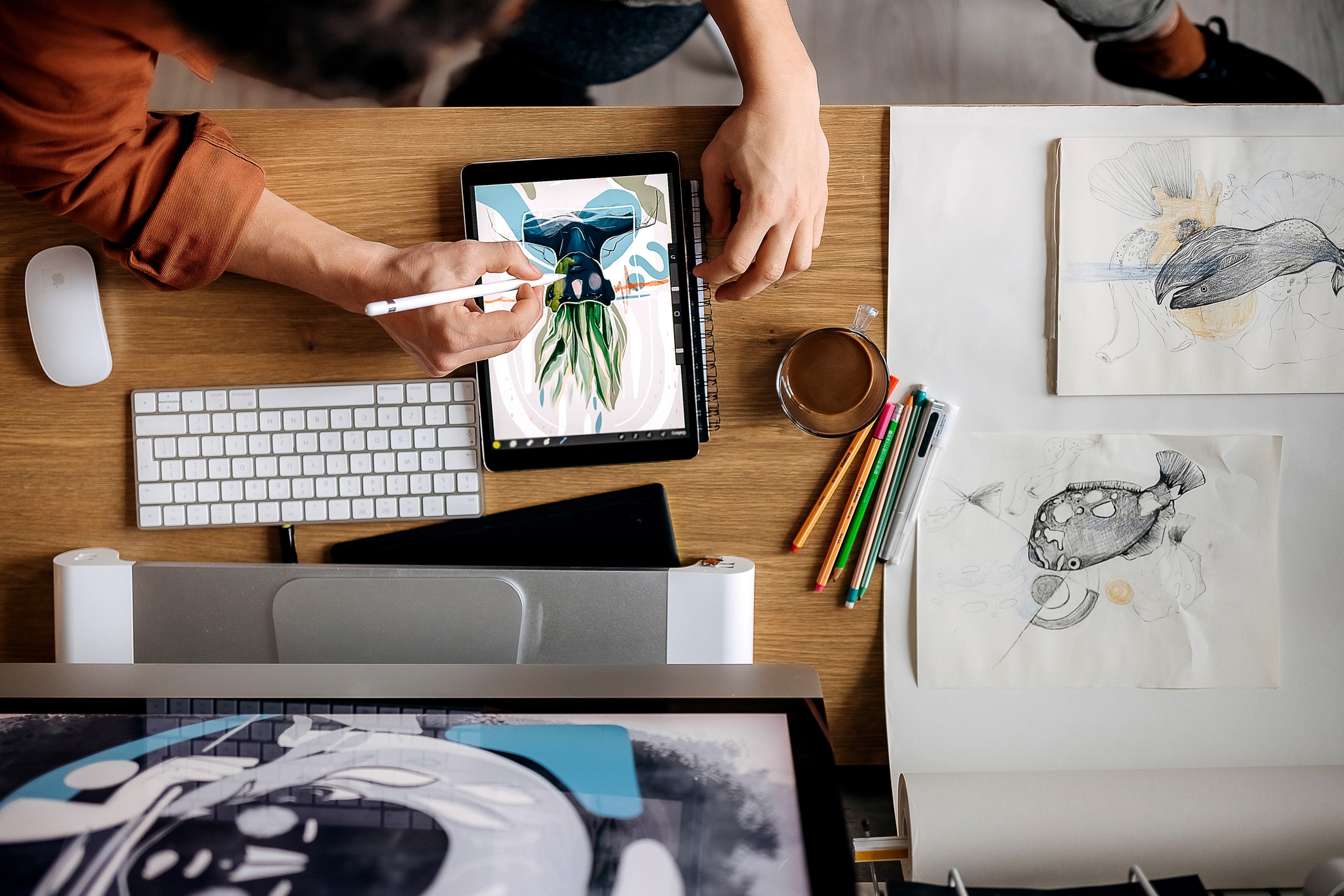
It's stuff that I've done before. I've been doing this for 20 years. I hope that I'm done experimenting with new techniques. I've created so many technical nightmares. I've got a pretty good relationship between work on paper, Photoshop, and Procreate and iPad that seems to flow quite well.
I think the last time I really threw caution to the wind and experimented with a new technique for a book was with the Fate of Fausto, and I tried to make that on a 200-year-old lithography press in Paris. We guessed it would take about three weeks to make all the artwork and it ended up taking something closer to four months working around the clock.
I'm very glad that I did that in the end, but with the new techniques, unless you've something that really lends itself to the concept of the book, I don't think there's any point in throwing a new experiment in for the sake of it. So I don't intend to start playing with new techniques anytime soon, unless something presents itself that I was like, ‘This makes a lot of sense for this concept.’

Do you think that good children's books should always contain a message?
No. In fact, I think potentially good children's books often get caught up in trying to thinly veil a moral imparting. Good children's books often do tend to contain a good message but that's because they don't go about trying to deceptively teach a lesson. They just happen to hit on an issue that humans are interested in just by way of being a good story.
One of the most popular of my children's books is Stuck. And that doesn't contain a lesson. What is that lesson? Throw increasingly larger objects at a problem until it is solved, or you forget about it? Not really a great lesson. So, no, I don't think they have to teach a lesson, and I do think we went through a phase where people thought that they did, and that notion is probably responsible for a lot more bad books than it is good ones, unfortunately.
But I think you can get good moral values across if it's done in an authentic way, rather than I'm going to disguise this preaching moral message that you should all know under the guise of this pretty story. I don't think it works that well.
I'm Very Busy: A (Nearly Forgotten) Birthday Book is out now.