



It's no surprise that the big AAA games emerging from China have also taken inspiration from the country's previous successful cultural exports, from mythology to martial arts. In Phantom Blade Zero's case, it's not just about leaning into martial arts through its combat but as a philosophy and aesthetic, so much so that the developer S-Game is coining its action RPG as 'kungfupunk'.
It's something that's apparent from the moment I press the button that begins my demo, where even the tutorial feels so flashy and cinematic that you could easily imagine being a QTE in one of Sony's first-party blockbusters, except the difference is you're still in control of these actions yourself.
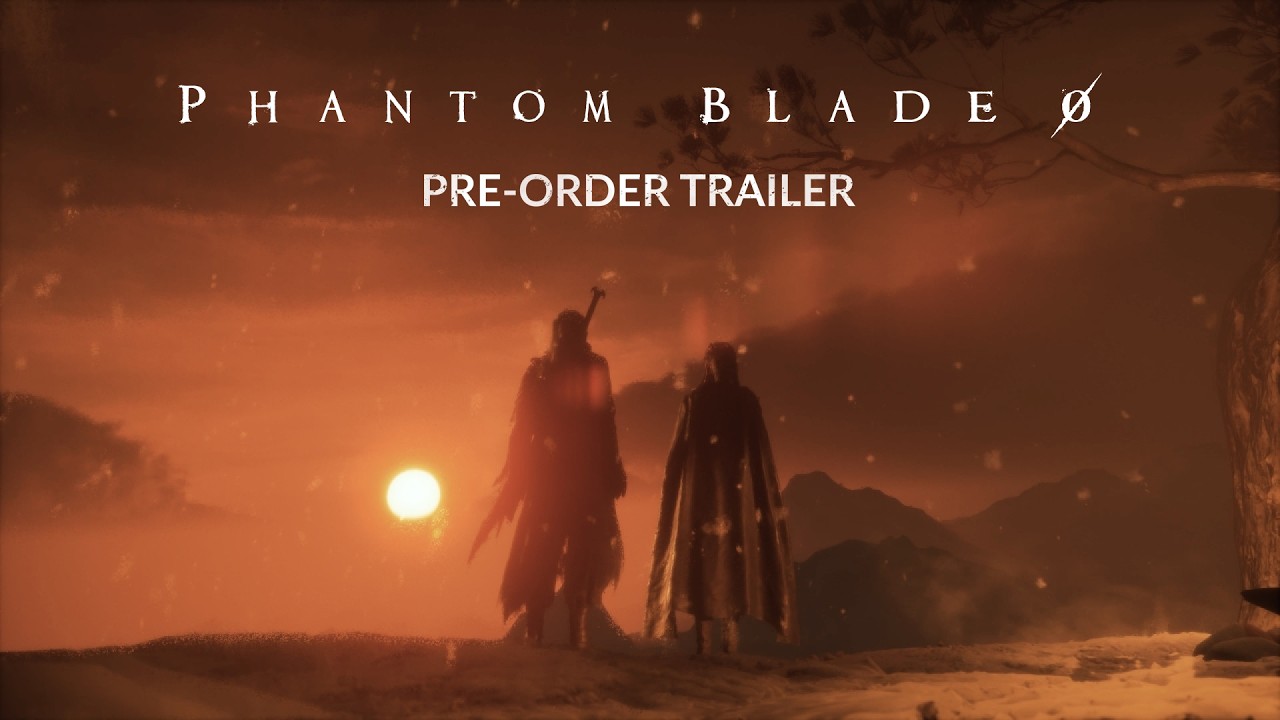
While I'm not able to go into the details of the opening sequences and how they relate to the story of your protagonist Soul, a skilled assassin who has just 66 days to live, while also framed for the murder of his master, I came away feeling like I had experienced a playable kung fu movie, reliving the iconic martial arts duels of classic wuxia films like Once Upon A Time In China or Crouching Tiger, Hidden Dragon, but where instead of just hitting a button prompt, I was in fluid control of my actions.
Mechanically, Phantom Blade Zero may share similarities with other action RPGs or Soulslikes, including colour-coded attacks to indicate whether you should dodge or parry, but what really sells the martial arts fantasy is just how fluid and dynamic the combat animations feel.
It's something you can tell when just holding L1 to block, which in another game would just be quite rigid as your character holds their weapon or shield to guard, but here it looks like Soul is attacking by clashing his blade against his opponent's, precisely how it looks in a wuxia fight.

That authenticity is down to how S-Game has not only mocapped the game's action with real martial artists but even employs wires just like those used in wuxia films that allow actors to perform larger-than-life acrobatics. Even Hong Kong action film veterans including action choreographer and film director Kenji Tanigaki and martial arts legend Donnie Yen are involved, though even in this considerably chunky hands-on time I didn't manage to run into the latter's in-game character.

Yet while these very cinematic animations and visuals realised in Unreal Engine 5 is the main draw, S-Game also elegantly incorporates hand-drawn aesthetics into other parts of the game, perhaps in reference to the original 2D Rainblood: Town of Death, which Phantom Blade Zero is technically a AAA reimagining of.
There's the game map for the Wulin, which is presented in the style of a Chinese ink painting, with more elements added the more of its semi-open world that you explore. While this style means it's actually more of an artistic representation than a more no-frills top-down map, it actually still felt very accurate as I was able to make out spaces and landmarks of areas I had already been to, from its treacherous rocky mountain paths to an outpost held by another faction calling themselves The Mandate.

While this outpost also happens to be located in a bamboo forest that's become a common trope amongst wuxia films, Phantom Blade Zero doesn't just stick to tradition, its kungfupunk aesthetic being a way to differentiate itself with taking subversive influences from more contemporary or even Western ideas, from cyberpunk to modern pop and rock music.
One such example is when I reach a tower where the architecture outside looks quite traditional yet inside also contains a furnace with steel pipes, while it also has another unusual design where it's decorated with red threads, symbolic in Chinese for fate, or marriage, though in this case it's meant to serve a more ominous connotation.

The most kungfupunk example however surely belongs to a fight I got to attempt at a later point in the game, a lion dance grandmaster that's even soundtracked to real percussions, except the lion's head is also designed with metal spikes while it's also able to breathe fire. But while it all looks spectacular, it's definitely not a game that's just dazzling you with cinematic set pieces that require simple QTE prompts.
After all, when I finally reach the Hunter of the Order at a great waterfall for a showdown that the whole chapter had been building up before, it would have been too anticlimactic if I had just wiped the floor with him on the first try.


To some extent, I felt that it might have been tougher than I expected, though it does a very generous thing of at least checkpointing between the phases of a boss fight (difficulty options to make things a little easier, or indeed tougher, are also available). But if Phantom Blade Zero manages to achieve the fine balance of making you look and play like a kung fu master in the same way that Onimusha: Way of the Sword makes you look and play like a samurai master, this could end up being very special.