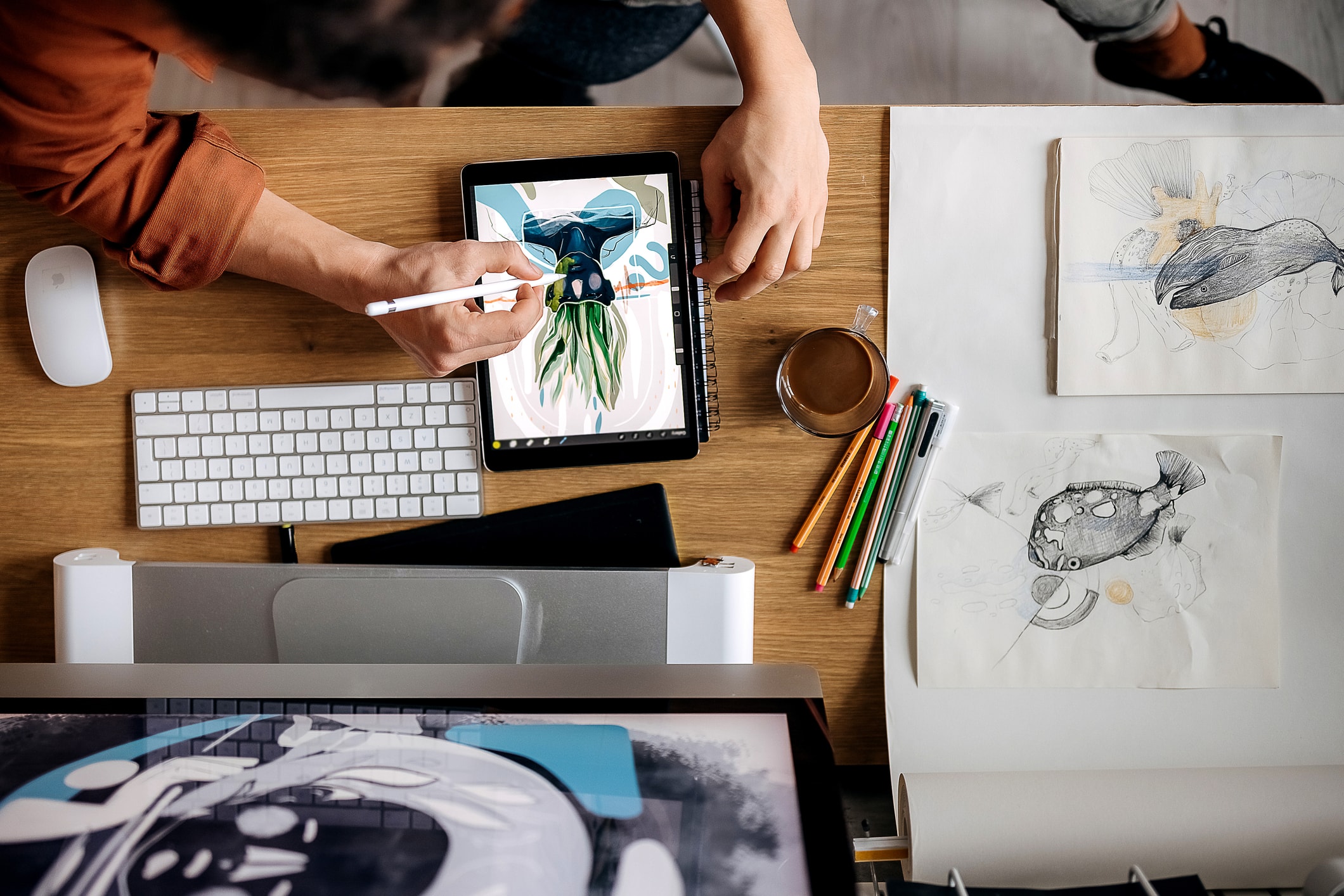








Stop-motion animation has been a popular aesthetic in indie games, giving creations a more tactile, handcrafted, and personal touch. But while many developers simply emulate this style digitally, two-person indie studio Talha and Jack Co prides itself on making real physical models. For co-founder Jack King-Spooner, creative director of the upcoming game Abide, it's always been what matters most.
"From studying art, I had just so much more affinity for tangible things and seeing what the materials give me as I'm making things," he tells me. "From my first game 15 years ago, I've always been invested in tangible assets. I couldn't really be bothered drawing pixel art when I could just make a little model and then photograph it from different angles, move it a little bit. It was just so much quicker for me."

Using 3D puppets and photogrammetry
While Talha & Jack Co's previous two games, the Scottish pagan action-adventure Judero and the chill post-apocalyptic robot-mining adventure Mashina, were sprite-based, Abide is more ambitious: a first-person 3D game, so they're scanning the epoxy clay models with photogrammetry, though cutscenes are still being created as stop-motion animation.
"The models are much, much bigger; they've got so much more detail," King-Spooner says, while bringing up a model in his hand as close up to the camera during our video call so that I can see the latex allowing for very realistic textures of skin pores and lips. "I'm always pushing myself with techniques, and finding new ways to do things. A lot of artists become frozen and immobilised with their craft because they think that there's a right way of doing things, whereas I just like doing things however I can."
Some of that detail nonetheless does have to be reduced, as a larger, more detailed model could be the equivalent of a super high-res model with 500,000 polygons. "We cut down to like 6,000 polygons so that we can hit good frame rates. They're a bit chunky, but for me they only needed to be recognisable as the same character as in the stop-motion cutscenes. I know lots of people love really tight graphics, but I'd rather spend the time on engaging story and engaging gameplay."


Handling stop-motion cutscenes
There are also additional parts that are made for the stop-motion cutscenes. For example, in a scene that requires a close-up of a character washing their hands, they use a larger hand for that shot instead of zooming in on the model's hands, then cut back to the normal model (something Thunderbirds' Jerry Anderson was famous for).
Even with games like Judero, the devs have noted that their stop-motion style has an inherent creepiness, so given that Abide is an "extreme stop motion horror" that includes prosthetic gore effects, King-Spooner is relishing that by doubling down on it. "There's something very abject and horrific about stop motion animation," he says, "It's got this nostalgia, but it's also got this kind of uncanny movement to it which you project life onto."
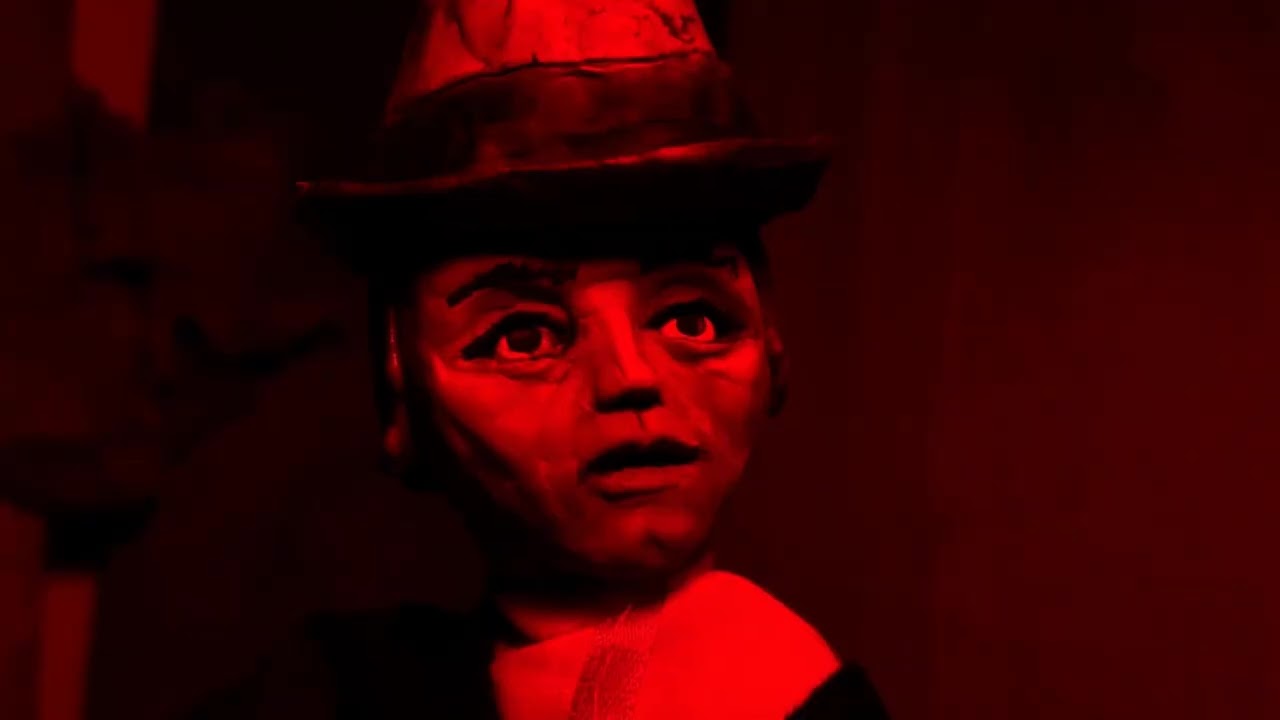
To an extent, it also feels like a deliberate response to counter the cosy perceptions people might have of this aesthetic. "A lot of handcrafted games are a bit kind of soft, aren't they? I think with Abide it's really nice that people will think, 'Oh god, a real person, this guy Jack is a real monstrous kind of person that he's made such perverted little dolls doing such horrible things!' I think it adds to the tangibility that it's very much a person's handiwork."
It nonetheless has an idyllic setting on the surface, set in the St Boniface retreat in the secluded countryside with a group of eight residents from different walks of life in some kind of need of them; at night it descends into full-on horror as you start sneaking around and explore parts of the house you probably shouldn't.
"One aspect which is very disturbing is they're all somehow reflections of myself," King-Spooner admits. "I think it's important for a creator to recognise that the work you output is somehow autobiographical of yourself. I'm just rather kind of transparent about it."


The downside to real models
In many environments, King-Spooner has also opted to build physical sets or paint textures, such as splattering red paint to make wood textures look bloody or putting on muddy boots and trampling them on white paper to scan.
If there's a downside to creating physical models and objects, it's that there's often no room to keep them, so after production is over, everything is either chucked out or the clay is mushed up to be reused, although King-Spooner isn't especially precious about preservation. As he bluntly puts it, "We're all going to be dirt in the ground."
Abide is coming soon to PC, and you can wishlist it on Steam.