



There's something especially magical about Christmas animation. Perhaps it's the way snow lends itself to stop-motion's tactile beauty, or how the season's themes of transformation and wonder align perfectly with animation's capacity for the impossible. Or maybe it's just that we're all in a good mood.
Unfortunately, the fact that we typically watch these animations at this time of year – amidst the chaos of kids running around, elderly relatives complaining loudly about something or other, and random rings of the front doorbell – means it's often easy to lose focus and miss out on their true genius.
So even if you've seen them before, I reckon these 5 movies are worth a rewatch this Yuletide season. (and supplement it with Snow Bear – Aaron Blaise's latest solo project). Because for us creatives, they represent more than just fun and cosy holiday viewing. They also happen to be masterclasses in visual storytelling, each demonstrating how animation can communicate profound emotion through movement, texture and design.
For next year's list, see the animation we're excited about next year. And if you're making your own, here are the best laptops for animation.
01. The Snowman (1982)

- UK: Watch it on Channel 4 for free
- US: Watch in on Pluto TV or Fandango at Home for free
Dianne Jackson's The Snowman remains one of the most audacious experiments in animated storytelling ever broadcast. Based on Raymond Briggs' picture book, this commission for the UK's Channel 4 strips away dialogue entirely, and trusts movement, music, and atmosphere to carry its narrative weight.
Its technical achievement is extraordinary. The film retains Briggs' original linework, visible throughout, which creates a curious double effect: the images feel both sketched and fully realised, dreamlike yet tangible. This unique graphic style, carried through from the storyboarding to the final frame, gives the fictional world a distinctive quality; simultaneously familiar and otherworldly.
Its famous flying sequence represents the film's technical and emotional apex. Crafted with meticulous detail (sweeping landscapes, rolling oceans, that magnificent surfacing whale), it's the perfect demonstration of how animation can create genuine wonder through painstaking craft. Each frame maintains the world's textured stillness, whilst the characters soar and glide through space.
But to me, The Snowman's real genius lies in its understanding of impermanence. That final image – the boy clutching his scarf beside a puddle of melted snow – isn't comfortable to watch, but that's what makes the whole experience so powerful. The ending marks both conclusion and beginning: experience becomes memory, which provides its own lasting comfort.
02. Mickey's Christmas Carol (1983)
While it's entertained countless generations of children over the decades, Mickey's Christmas Carol might seem slight compared to The Snowman's ambition. But don't be fooled. This 26-minute adaptation of the classic Dickens tale represents something equally remarkable: a studio rediscovering its heritage whilst simultaneously pushing technical boundaries.
For context, Mickey Mouse hadn't appeared in an original theatrical cartoon since 1953. Thankfully, director Burny Mattinson – a Disney lifer who started in the mailroom – understood that this return demanded reverence for character history, combined with contemporary animation excellence. The result is a film that treats characters from literature with genuine respect whilst delivering lush, sophisticated animation far beyond typical TV specials of the time.
The casting brilliance cannot be overstated. Mickey's earnest kindness makes him perfect as Bob Cratchit. Donald Duck's bombastic energy suits the enthusiasm of Scrooge's nephew Fred. And Goofy's loose physicality brings unexpected poignancy to Jacob Marley's shackled ghost.
More importantly, though, pay attention to the film's economy of storytelling. Twenty-six minutes isn't much time to get through this complex narrative. Yet nothing ever never feels rushed, because visual shorthand communicates vast amounts in mere moments. Scrooge's counting house immediately establishes his miserliness; Cratchit's humble home tells us everything about the family's circumstances. This is visual storytelling stripped to essentials, with every frame serving a purpose.
03. The Nightmare Before Christmas (1993)

- Watch it on Disney+ with a subscription
Bringing together Tim Burton's conceptual imagination and Danny Elfman's epic music, The Nightmare Before Christmas heralded a new era for stop-motion animation; achieving feature-length ambition without ever compromising craft. Every frame here bursts with visual invention, from Halloween Town's gothic exuberance to Christmas Town's pristine wonder. And even three decades on, the technical achievements still seem astonishing.
Consider the fountain sequence during the song This is Halloween. That flowing water is 100% stop-motion, requiring frame-by-frame manipulation whilst characters move around it constantly. There's the Christmas door knob shot, where Jack's reflection had to be captured with perfect lighting and precise positioning, frame after painstaking frame. Or take the merry-go-round scene, where Jack walks against the rotation whilst every figure moves up and down independently. These aren't just technical flexes; they're animators pushing insane boundaries, because that's what the story demands.
The character animation, too, is astounding. Jack's skeletal physiology allows for impossible articulation; those elongated limbs create expressive shapes unavailable to more realistically proportioned characters. Sally's stitched-together body, meanwhile, tells her story visually before she speaks. And who will ever forget Oogie Boogie's burlap sack form, concealing writhing insects, revealed through skilful lighting and subtle movement?
Importantly, though, all this technical wizardry is only here to serve emotional clarity. Jack's existential crisis – his weariness with routine, his hunger for meaning – resonates with us because the animation communicates his feelings through posture, gesture and movement. Note how, when he discovers Christmas Town, his wonder manifests physically: he's taller, lighter, transformed by possibility. This is character animation at its most expressive.
Oh, and did I mention the songs are insanely catchy? All in all, it's hard to imagine that if it were made today, even with all the technological advancements we now benefit from, this film could be any better.
04. Robin Robin (2021)
- UK: Watch it on BBC iPlayer for free
- US: Watch it on Netflix with a subscription
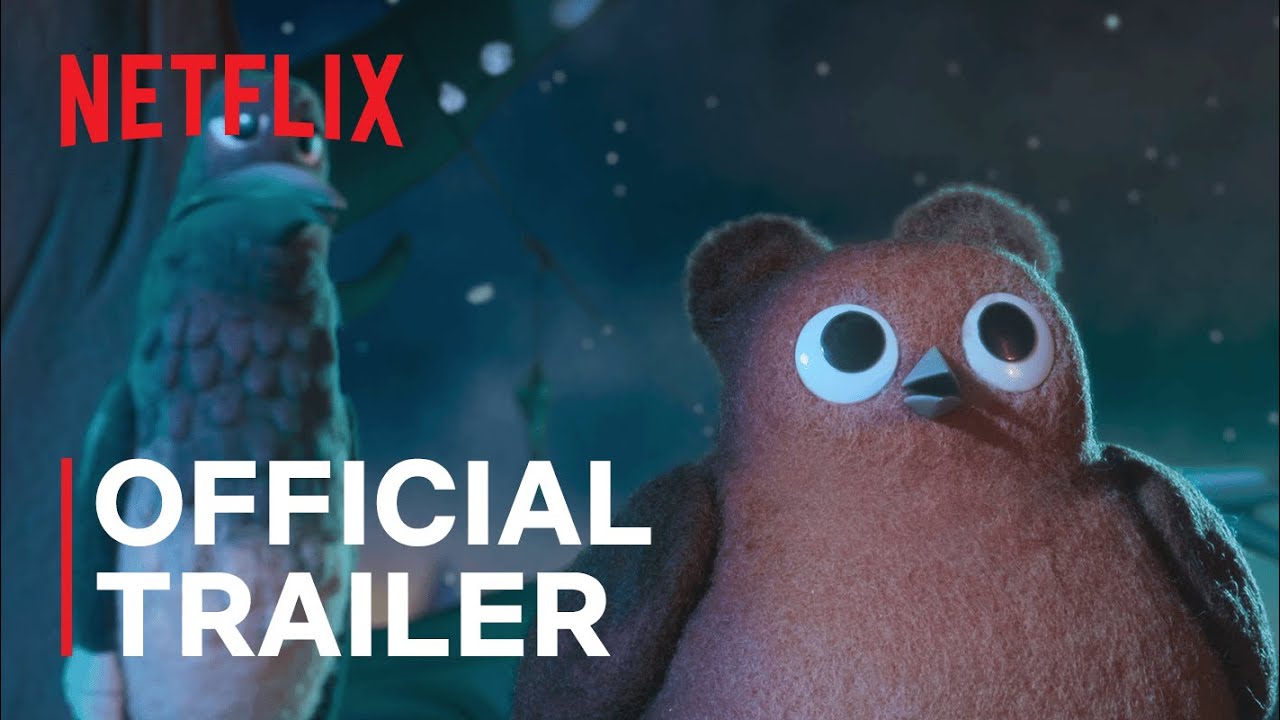
Aardman Animations' first musical introducesd something rarely seen in stop-motion: felt puppets. This material choice fundamentally changes the medium's visual language. Felt brings inherent warmth and texture, and so Robin and her mouse family possess a handmade quality that brilliantly reinforces the film's themes of found family and belonging.
Also note how the material's fuzzy edges create a visual softness that contrasts beautifully with the harder surfaces of human environments; kitchen worktops, shiny teacups, metallic trinkets. This textural variation becomes storytelling tool, differentiating worlds through tactile properties.
As Aardman's first musical, Robin Robin also required unprecedented choreography. Every movement coordinates with Ben Please and Beth Porter's rhythmic score; even seemingly accidental actions like knocked-over teacups hit on musical beats. This, as you might expect, demanded meticulous planning; songs and lyrics had to be completely finalised before filming began. The result is stop-motion animation that dances, an achievement requiring perfect synchronisation between multiple departments.
And watch how musical numbers enhance the comedy. For instance, as Robin's enthusiastic singing contrasts with her mouse family's need for silence, creating tension that's both funny and poignant, the animation captures her struggle wonderfully. She literally cannot contain her song; as her wings flutter uncontrollably, she bumps into everything. Movement becomes melody becomes character. Incredible.
05. Tokyo Godfathers (2003)
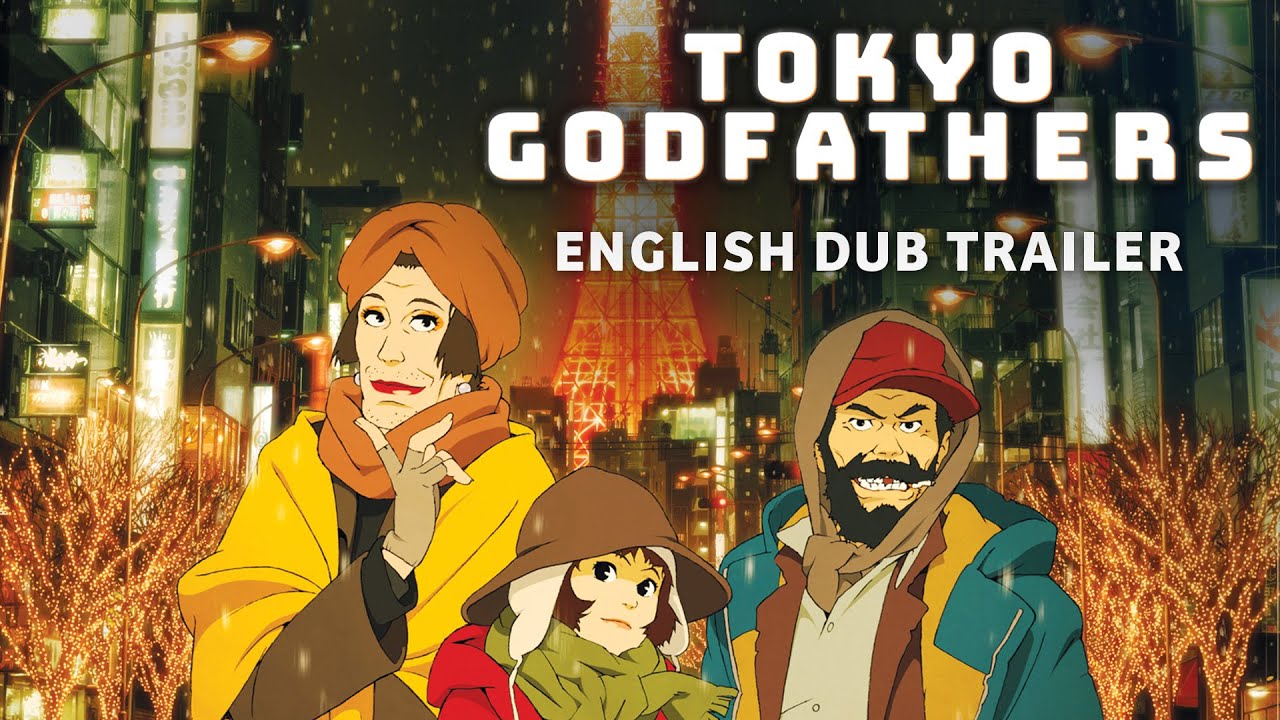
This tragicomedy isn't the best known Christmas animation on our list, at least outside its native Japan. Yet it demands to be included, because it's such a fabulous demonstration of how animation can achieve emotional truth through observational detail.
Director Satoshi Kon's vision of Tokyo is rendered with extraordinary specificity. The city's geography (towering skyscrapers, neon streets, labyrinthine alleyways) provides an authentic backdrop for this story of three homeless people discovering an abandoned baby on Christmas Eve. And the contrasting visuals between bustling prosperity and hidden decay create vivid context for the people society has overlooked.
Character animation, too, deserves particular attention. Hana, the transgender woman who becomes the trio's emotional anchor, is animated with remarkable sensitivity. Watch her movements – the way she cradles baby Kiyoko, her determined stride through snow, her expressive hands during emotional moments. Gin, the alcoholic, and Miyuki, the teenage runaway, receive equally nuanced treatment. This is animation respecting lived experience, finding truth in gesture and posture.
In the grand tradition of Dickens, Tokyo Godfathers tackles serious social issues – homelessness, marginalisation, family fragmentation – without ever sacrificing entertainment. The film creates space for empathy precisely because it's animated, allowing audiences the space to engage with characters they might otherwise cross the street to avoid.
For more awesome animation, see the list of the most influential animation of the 2000s.