There's something enchanting about Christmas on film. Snow becomes negative space, fairy lights turn into de-facto key lights, and production designers have narrative permission to go maximal, sentimental or outright weird.
For creatives, that makes the best Christmas films a gift. Because it means they're not just nostalgic, comfort viewing. They're also inspirational exercises in image-making, where blocking, colour, costume and composition all pull in the same emotional direction.
This list focuses on live-action films whose beauty lies less in postcard prettiness and more in the boldness of their visual decisions. Each uses Christmas as a visual device: a way to heighten contrast, sharpen character, and push cinematography or design into more expressive territory. In short, these films don’t just warm the heart, but sharpen the creative eye. Also see our pick of the best Christmas animation films all creatives should watch now.
01. Edward Scissorhands (1990)

What's the story?: Tim Burton’s modern fairy tale follows Edward, an unfinished artificial man with blades for fingers, who is discovered in his crumbling hilltop mansion by kindly Avon lady Peg, and brought down into a pastel American suburb that embraces him. The story traces his awkward rise as a local novelty and his tender love for Peg’s daughter Kim, before things take a darker turn.
Why it's remarkable: The film uses Christmas as a visual fault line between pastel conformity and gothic otherness. Suburbia is rendered in near-neon pastels, with every house and hedge designed like a toy-town diorama, making Edward’s black, baroque silhouette read as graphic punctuation in every frame.
For creatives, it's a lesson in contrast as narrative tool. Inside the castle, low-key lighting, deep shadows and desaturated greys turn machinery into a kind of metal forest, all negative space and texture. In the cul‑de‑sacs, high key-light and flat, candy colours create what one critic called a “moonscape of faceless suburbs”; deliberately compressing depth so emotional life feels airbrushed out.
Snow, meanwhile, becomes a designed effect: an ice‑sculpting sequence that showers flakes over a dancing Kim, turning production design, lighting and performance into a single moving installation piece.
02. Batman Returns (1992)

- UK: Rent it on Google Play or Apple TV
- US: Watch it on Paramount Plus with a subscription
What's the story?: Tim Burton’s second Batman film unfolds over a snow‑blanketed Gotham Christmas, as Bruce Wayne confronts a new alliance between monstrous sewer‑dweller the Penguin and ruthless industrialist Max Shreck. As their chaos spills across the city – complicated by the arrival of the vengeful, leather‑clad Catwoman – Batman is drawn into a wintry, operatic battle for Gotham’s soul.
Why it's remarkable: I make no apologies for including two Tim Burton films on this list. Because Batman Returns is the definitive gothic Christmas movie: a winter carnival built on sound stages, miniatures and a deranged sense of scale.
Gotham Plaza, with its fascist statuary, looming government buildings and overbuilt Christmas tree, was constructed indoors and extended with matte paintings and miniatures to feel like a totalitarian civic space dressed in fairy lights. The film’s expressionist look was heavily influenced by German Expressionism, specifically The Cabinet of Dr. Caligari. Stefan Czapsky’s cinematography, meanwhile, uses Christmas décor as its primary light source, letting strings of bulbs, searchlit bat‑signals and icy reflections carve hard shapes into the darkness.
In the Penguin’s lair under an abandoned zoo, HMI beams bounce off water to send moving caustic patterns up stone arches, while gels in sickly greens and sulphur yellows turn the set into a toxic grotto. I could go on, but you get the idea. The point is that for creatives, this film just shows how far you can push stylisation while still building a coherent visual world. And when you're Tim Burton, the answer – it turns out – is pretty darned far indeed.
03. Eyes Wide Shut (1999)

- UK: Rent it on Google Play or Apple TV
- US: Watch it on Tubi for free
What's the story?: Stanley Kubrick’s final film follows New York doctor Bill Harford, whose Christmas‑lit wanderings through the city over one long, hallucinatory night are triggered by his wife Alice’s confession of a past sexual fantasy. Determined to test the limits of his own desires, he drifts into a secret world of masked rituals and quiet corruption, only to find that curiosity comes with a price.
Why it's remarkable: Eyes Wide Shut treats Christmas lights as both décor and primary cinematographic tool. Larry Smith and Stanley Kubrick push 35mm stock two stops, shooting at around T1.3, so that walls of very low-wattage fairy lights bloom into halos and practicals create a wonderful, warm glow, with deep blacks. The Ziegler party, lit almost entirely by a massive curtain of Christmas lights, becomes a kind of moving light installation through which the Steadicam roams in 360 degrees.
On the street sets, Smith relies on lampposts, dimmer-controlled bulbs and shop windows to create pockets of light, punctuated by more Christmas fixtures to keep the festive motif alive, even in Bill’s most alienated wanderings. Interiors oscillate between saturated orange tungsten and hyper-saturated blue moonlight from arc sources, creating a deliberate colour dissonance that sells the film’s dream-logic atmosphere.
In short, for visual storytellers, Eyes Wide Shut is a reminder that lenses, exposure and practicals can turn even a familiar holiday palette into something uncanny and psychologically charged.
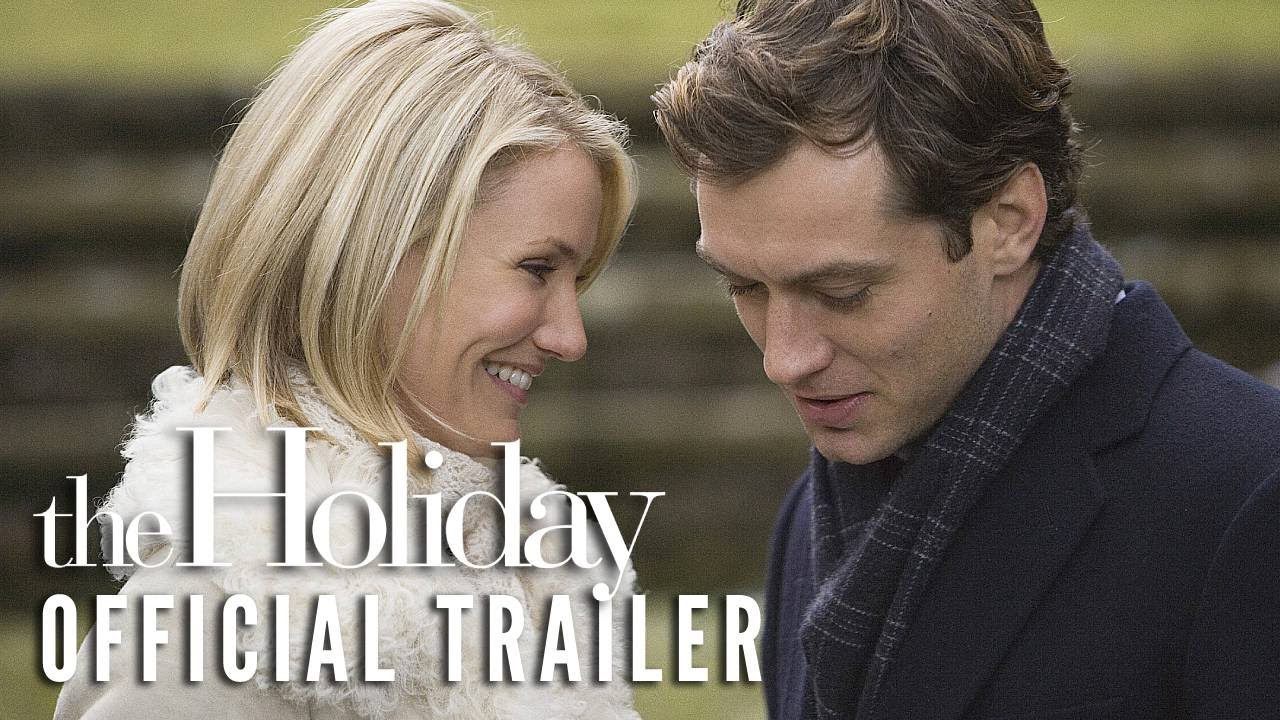
04. The Holiday (2006)
- UK: Watch it on BBC iPlayer for free
- US: Watch it on Philo with a subscription
What's the story?: In this transatlantic romantic comedy, overworked LA trailer editor Amanda swaps homes with heartbroken Surrey copy editor Iris for the Christmas holidays, each fleeing their personal disasters. Immersed in each other’s worlds, Amanda falls for Iris’s charming but complicated brother Graham while Iris slowly rebuilds her self‑worth through a new friendship with composer Miles and an ageing Hollywood screenwriter.
Why it's remarkable: Written, produced and directed by Nancy Meyers, The Holiday might masquerade as comfort viewing, but its power lies in how production design tells the story long before the dialogue does.
Amanda’s LA home is all glass, steel, creams and clean lines: a meticulously controlled environment where the kitchen is bigger than most people’s flats, every surface edited to perfection. It visually encodes her emotional state – successful, insulated, over-lit, with no shadows left for vulnerability. By contrast, Iris’s cottage was built from scratch in a Surrey field to achieve the precise chocolate-box imperfection Meyers wanted, then recreated on sound stages as a warren of low ceilings, book-stuffed alcoves and fire‑lit corners.
Snow here is as much a set dressing as a weather event: biodegradable drifts laid over hillsides, a reminder that even “natural” magic can be carefully art‑directed when used in service of story. For anyone working as a visual creative, The Holiday is a masterclass in environment as character design.
05. Carol (2015)
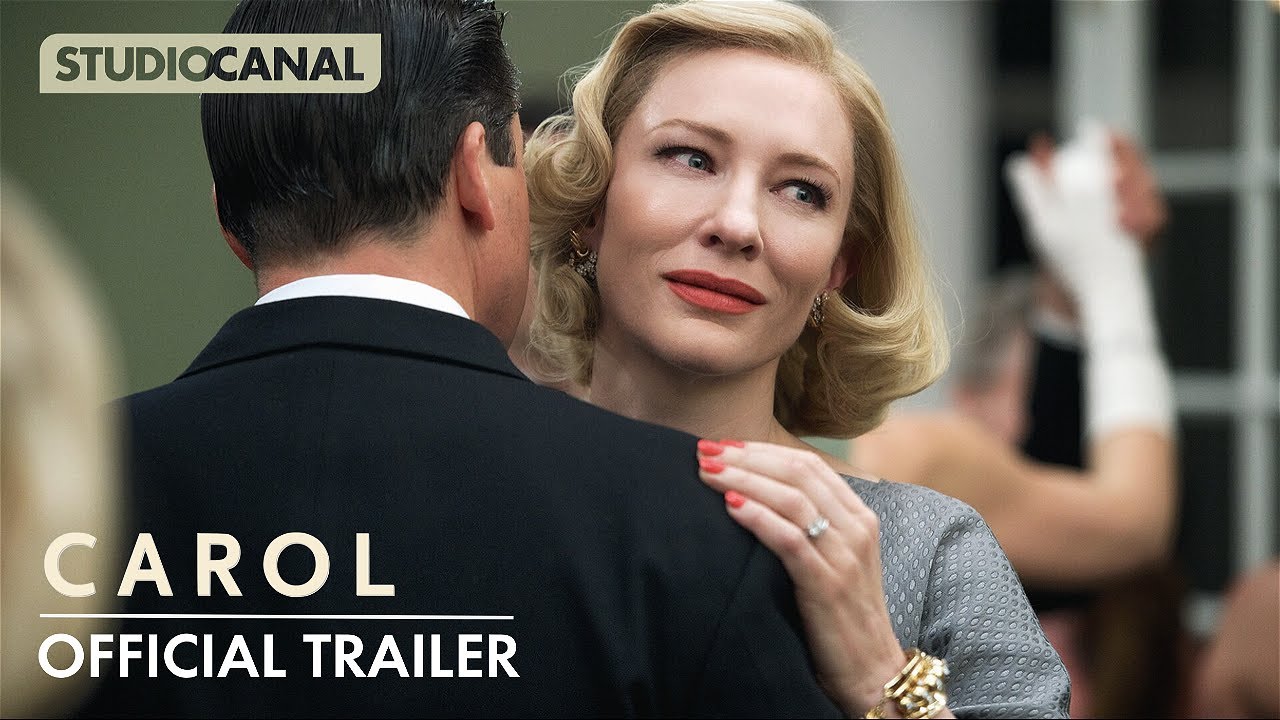
What's the story?: Set in early 1950s New York, Carol charts the relationship between Therese, a young shopgirl and aspiring photographer, and Carol, a glamorous, married woman whose life is quietly coming apart. What begins as a tentative friendship sparked by a forgotten pair of gloves deepens into a love affair that pushes both women to choose between social respectability and emotional truth.
Why it's remarkable: Todd Haynes’ Carol is a Christmas film of shop windows, steamed-up glass and the colour of longing, all built on Ed Lachman ASC’s tactile Super 16 cinematography. Shooting on Kodak Super‑16 stocks, Lachman leans into grain as a living texture, describing it as a way to make the image feel like a decades-old photograph rather than digital illustration. That grain, combined with a soiled, muted palette drawn from mid‑century colour photographers such as Saul Leiter, gives every frame a soft, melancholic vibration.
Christmas itself arrives as a choreography of reds and greens that never tips into cliché. Lachman and Haynes reject gloss in favour of dirty windows, sodium vapour streets and interiors lit by practical lamps and Christmas strings – pushed two stops in development to bloom into a surreal glow. Reflections, glass and framing through doorways create layered compositions where faces are partly obscured, echoing the lovers’ need to stay hidden in plain sight.
For creatives working today, Carol is a gold-standard case study in how lens choice, stock and colour separation can externalise an inner emotional state.
Inspired? See our pick of the best laptops for animation.