
We all know paintings age over time, but thanks to some clever technology, we can now imagine how exactly Edvard Munch's The Scream will look in 300 years time.
A digital tool, the Light Damage Estimator, developed by the Norwegian University of Science and Technology also shows how the artwork may have changed since it was painted.
The team were able to establish an overview of the different pigments in the painting using X-rays to identify the chemical composition of different materials.

"For example, when mercury was discovered in the red brushstrokes in the sky, it became clear that Munch had painted with cinnabar – a mineral containing mercury," said PhD fellow in computer science at the university, Irina-Mihaela Ciortan.
They also found cadmium for yellow and cobalt in cobalt blue and ultramarine.
Collaborators in Italy made a series of small samples based on the painting, the samples, or fake painting, were then put through an accelerated aging process in a climate chamber. They were exposed to varying humidity and light conditions while the team documented any changes.
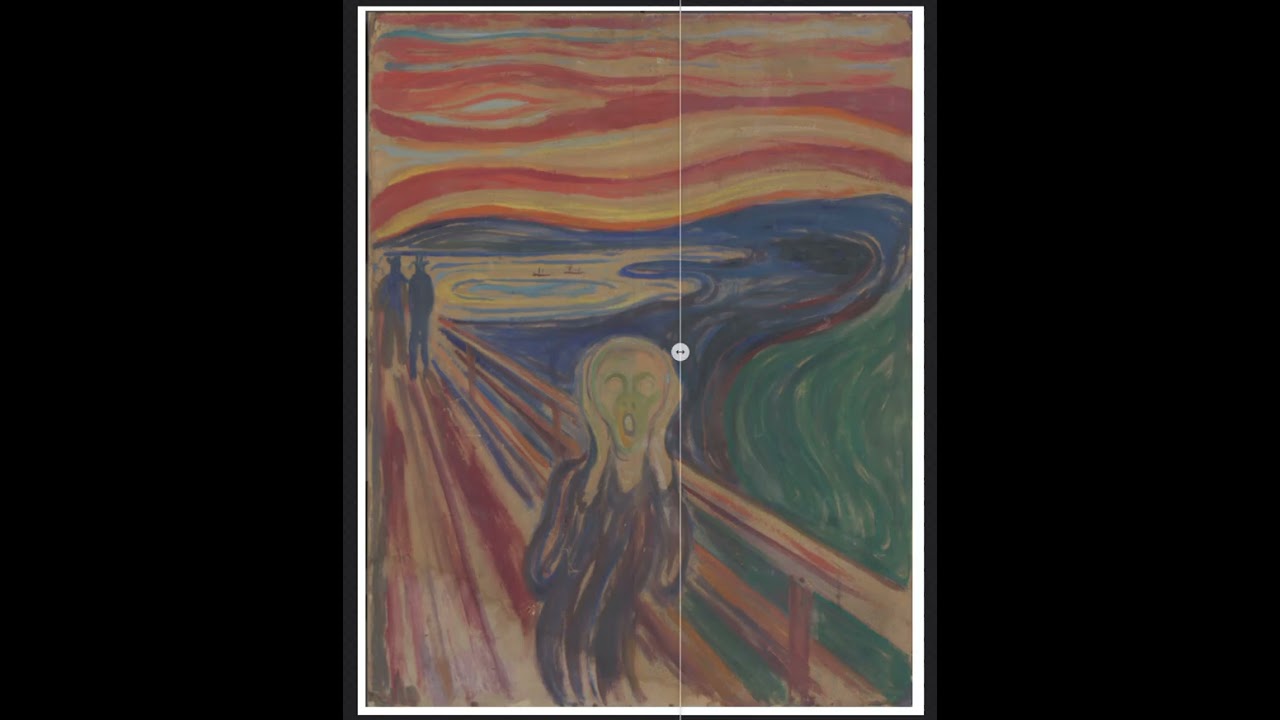
"After observing how the samples developed in the climate chamber, we calculated how long the relatively short time spent there corresponds to in actual years in the museum," said Irina-Mihaela.
This led to the Light Damage Estimator, which can be adjusted to factor for colour, light source and intensity and time of exposure.

Some parts of the painting have aged differently to others, and this depends on the pigments used. Munch appears to have used several different binders with ultramarine, for example, and this means that some areas of blue are more faded than others.
This tool could potentially be used to analyse other paintings in future, although at the moment it only really works for The Scream and a few other select paintings and is limited to two of the most vulnerable pigments: cadmium yellow and cinnabar red.
“There is still a lot of work to be done before the tool can be used on any other paintings," said Irina-Mihaela. "If you wanted to upload another work of art, you would need to know which pigments and binders had been used and exactly how they are distributed across the painting to get a reasonably accurate result."
In future, perhaps, AI could help speed things along, but for now we'll have to be content with viewing how The Scream may look for future generations. And to be honest, it doesn't really look that different, which I find quite comforting.
For more on famous artworks, see our favourite online art galleries.