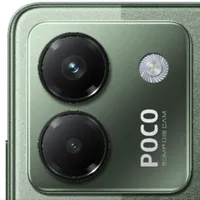
Writing this in February 2026, I’ve realised something slightly embarrassing: I never swapped my SIM out of the Poco M7 Pro I reviewed last May (read my original review here). I’ve had far more powerful phones pass through my hands since then – flagships with dazzling cameras, silky-fast processors, and screens that could outshine a studio light – but somehow, I just never made the switch.
Essentially, then, the Poco M7 Pro – a modest handset that launched at £239 and now sells for just £197.95 – is still my main phone.
At first I thought I was just being lazy. But living with the Poco over the past year has made me question some of the assumptions that underpin tech journalism; specifically, the idea that specs always translate to better daily experience.
Comfort and consistency

Don't get me wrong: I can’t pretend the Poco M7 Pro is flawless. Its camera system lacks an ultrawide lens, the night shots are only okay, and the user interface arrives bloated with apps that you’ll immediately want to turf out. On paper, plenty of mid-range rivals beat it hands down.
But I don’t live on paper. And in daily life, this phone just feels... right.
Everything about it is easy, consistent and unfussy. The 6.67-inch AMOLED screen still impresses me every time I unlock it. With a 120Hz refresh rate and up to 2,100 nits brightness, it’s vivid and buttery smooth: the kind of display that used to be reserved for £800+ devices. It’s also nicely compact for one-handed use, and the lightweight chassis, with its textured back and gentle curves, still looks good after a year of wear. It genuinely feels like a comfortable pair of slippers: nothing flashy, just steady, dependable comfort.
That’s a quality we don’t talk about enough in tech. Reviewers (myself included) often chase novelty or benchmark performance, but comfort and consistency are what keep you loyal to a phone. The M7 Pro nails both.
Functionality
Think about this: the M7 Pro’s Dimensity 7025 Ultra chipset, its 8GB of RAM, and its 120Hz OLED panel would have been marquee specs on a flagship not so long ago. Today, they’re “mid-range” at best, but that phrase undersells the real-world experience of actually using it.
Scrolling is instant, app switching is fluid, and even light editing in Photoshop Express or Lightroom Mobile feels snappy. Battery life, meanwhile, remains exceptional; about two days between charges with normal use. The included 45W charger fills it from empty in little over an hour, faster than many “premium” models.
Creative work on the go, whether that’s reviewing images, taking notes or catching up on email threads, is buttery-smooth. There’s an ease to the M7 Pro that encourages you to forget about it and just use it… which is really the highest compliment you can pay a piece of tech.
When I reach for another phone – say, a flagship with a stunning triple-lens camera – there’s often a moment of appreciation, followed quickly by irritation. Suddenly, I’m managing charging anxieties, fussy gesture systems, or overheating under camera use. The Poco, by contrast, feels transparent; it gets out of the way.
Design and usability

It’s easy to assume that creative professionals, of all people, should always want the best camera and processing power available. But in reality, that’s not how most of us operate daily.
When I need to shoot product photos or content for work, yes, I reach for a proper camera or occasionally a more advanced smartphone. The rest of the time? The M7 Pro’s 50MP Sony sensor is more than capable of quick portraits or snaps for social. Optical image stabilisation keeps everything steady; colours look natural rather than hyper-saturated, and portrait mode, while not perfect, still flatters most subjects.
For messaging, quick snaps, location recon, music on the go – all the mundane yet essential bits of digital life – my Poco as good as many phones that are twice the price. And that’s the quiet revolution of modern budget phones: they’ve stopped being compromises.
In many ways, the Poco M7 Pro has reminded me that design restraint can be a virtue. The high-end models I test often drown you in features: multiple camera modes you’ll never use, AI tools that keep screen time humming. Budget devices like this live in a simpler world. They do fewer things, but do them well.
It’s telling how stable and bug-free my M7 Pro has remained since I unboxed it last year. It’s running the same HyperOS interface as pricier Xiaomi test units, minus the performance quirks. I suspect it’s because the engineering is aimed squarely at reliability rather than stretch. There’s a satisfaction in that honesty.
This isn’t the phone you’d use to shoot a short film or grade HDR footage on location. Nor is it a prestige object to show off next to your MacBook Pro. But as a daily companion (light, bright, unpretentious), it’s exactly what I want.
Phones like this prove that the old “budget phone” label no longer signals compromise; it signals value and refinement. For under £200, you get a device with a display that rivals last generation’s flagships, performance that feels effortless, and battery life that politely declines to quit.